A travel essay in five parts, published chapter by chapter. I’ll update this page as each section takes shape, with the latest addition noted in the title.
Since returning from Sicily, I haven’t managed to write a word. Syracuse has remained like a bookmark tucked into the pages just before my Russian journey.
There is a dark little joke: Back from Syracuse, on to the Gulag.
Syracuse, in this joke, is an abstraction: Plato’s ideal state, the philosopher-king put to the test, a city-state that existed more convincingly on paper than in reality. Plato travelled there three times, and was disappointed three times. Russia’s suffering, by contrast, is painfully concrete. When a Russian book describes forced labour, there is a fair chance the author has experienced it firsthand. Reading Russian literature, one is struck by how easily forced labour and exile seem to fall upon people – even ordinary people.
The decision to spend the long holiday in St Petersburg and Moscow was made rather hastily. What Chinese social media calls travel on hard mode is really just the level of difficulty we used to take for granted before the Nokia era.
The Empire’s World, the World’s Empire
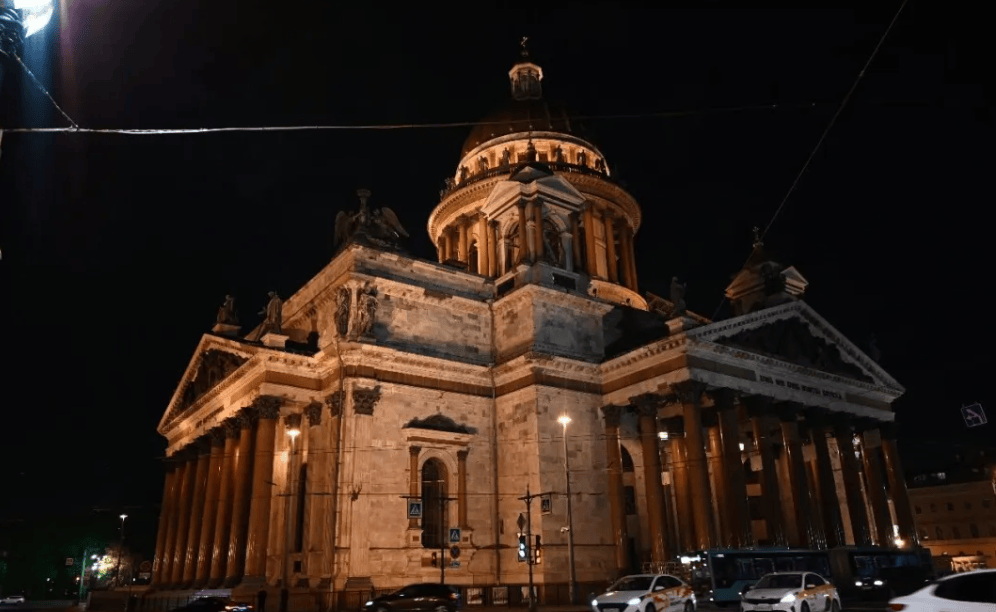
St Petersburg has a way of making you feel you have been here before. It feels familiar, and yet it is unmistakably your first visit.
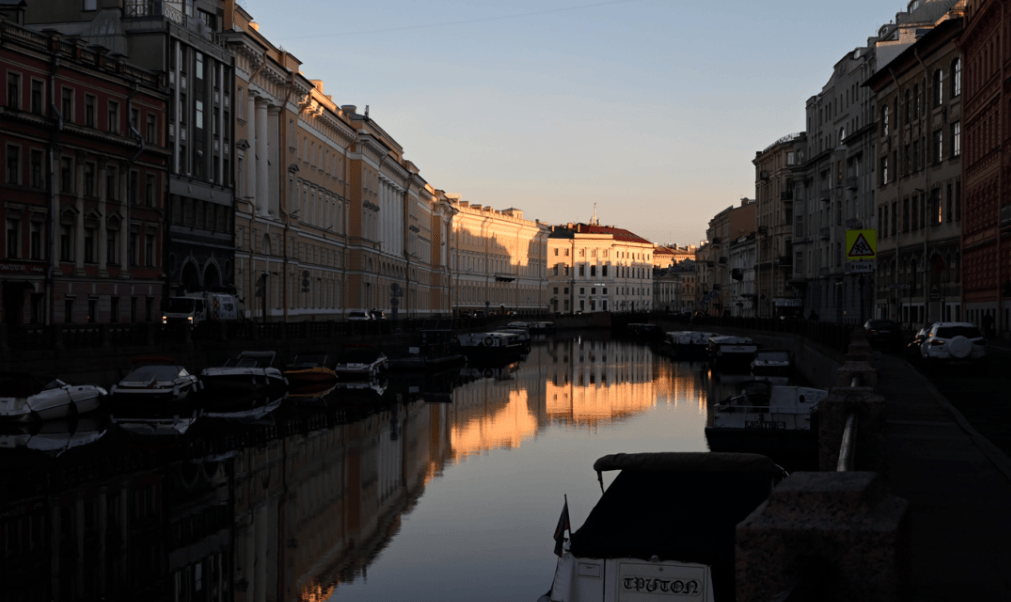
This is the city Peter the Great built in homage to Europe: Russia’s Paris, the Venice of the North. On a clear morning, St Petersburg looks a little like Paris, only cleaner – so clean that it scarcely feels like a major European city. There is something quietly disconcerting about that cleanliness. You recognize its outlines, yet somehow feel that it belongs nowhere in particular.
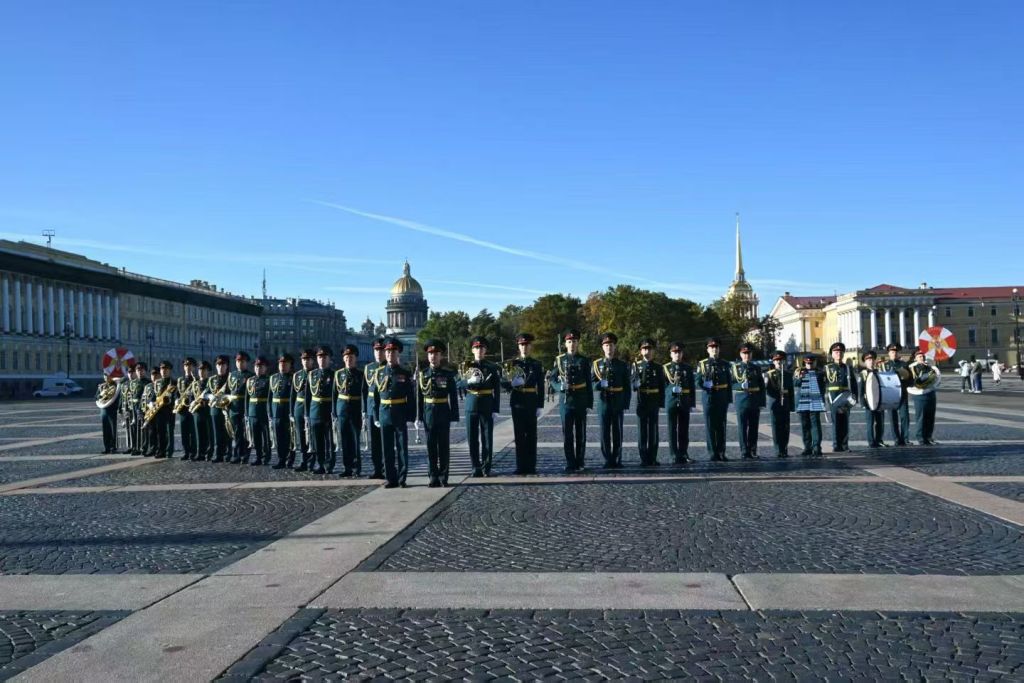
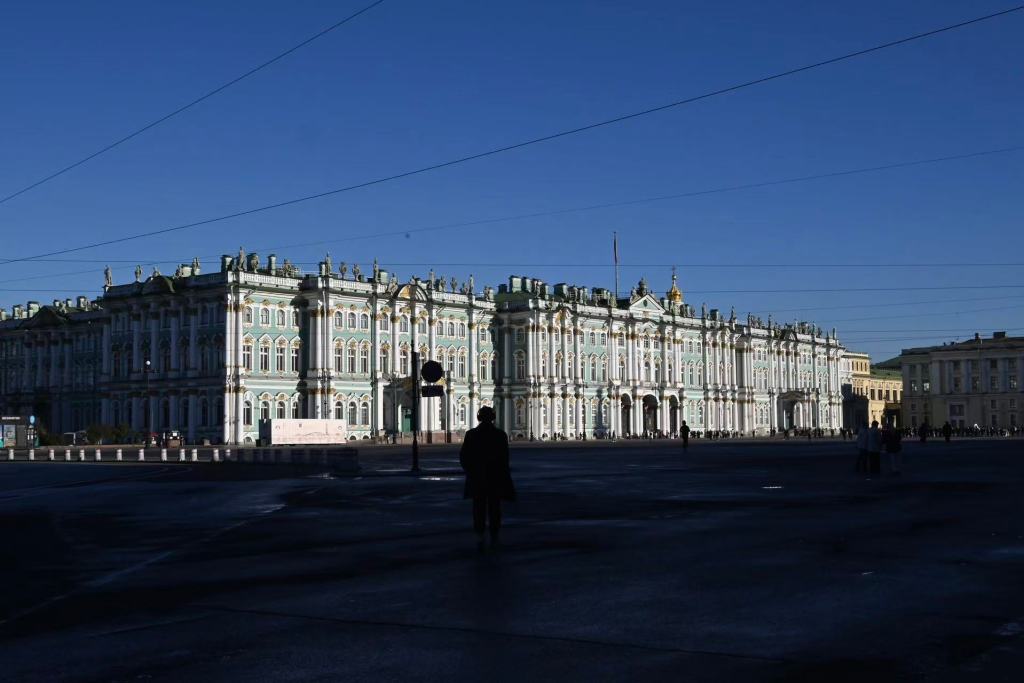
I had only meant to scout out the area around the Hermitage. When I spotted a military band, I hurried over to see what was going on, hoping for a bit of free music. But they were only there to pose for photographs, with absolutely no intention of entertaining the public. Stingy.
Like the Louvre, the Hermitage occupies a palace never designed to function as a museum. The layout is labyrinthine, the scale immense, and the density of the collection almost absurd. Guides usually recommend the second floor, but for anyone who has visited the great museums of Western Europe, the handful of works by Michelangelo, Raphael and Caravaggio can seem like grains of rice. The Sleeping Hermaphroditus and Cupid Awakening Psyche are cases of “one for the Louvre, one for the Hermitage”. Not that they aren’t worth seeing. It’s just that with limited time, it’s hard to spare the energy to “waste” on things you’ve seen too many times.
I had come to see Western Xia.
The last time I encountered the world of Western Xia was in Gansu: Huachi, a frontline in the wars between the Song dynasty and Western Xia, and Wuwei, once a secondary capital of the Tangut kingdom. The traces of a vanished civilization survive in square-script characters, woodblock prints and carved ceramics.
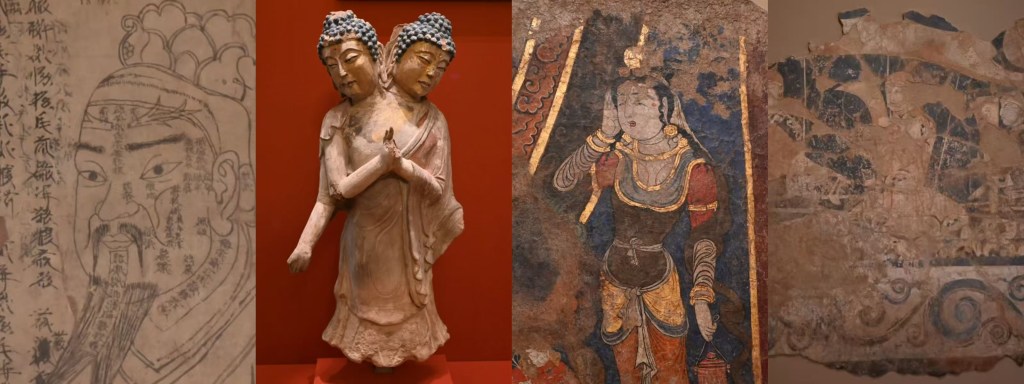
The Hermitage was different. Here were vivid colours, Buddhas and bodhisattvas rendered in Chinese styles, donors with Tangut faces, and images blending Chinese aesthetics with Tantric traditions. Khara-Khoto, an abandoned city, becomes a time capsule, preserving an immense visual record. Unfamiliar writing keeps us at a distance; we cannot read it. Images, however, seem to bring us a little closer to the lives that time has hidden away.
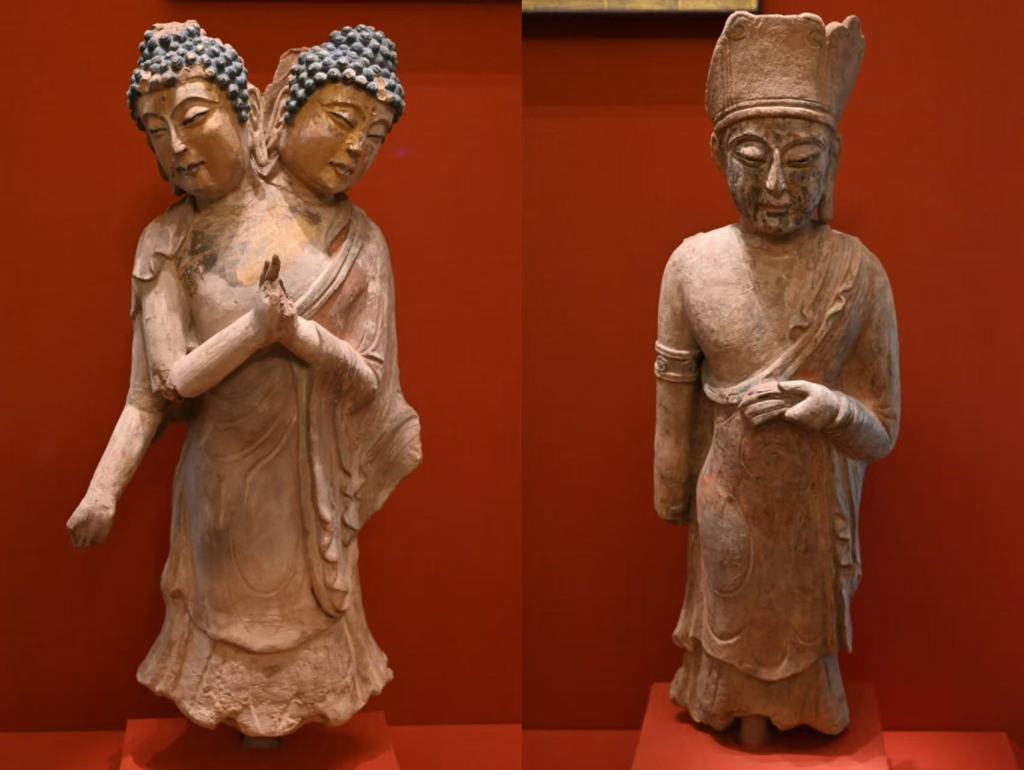
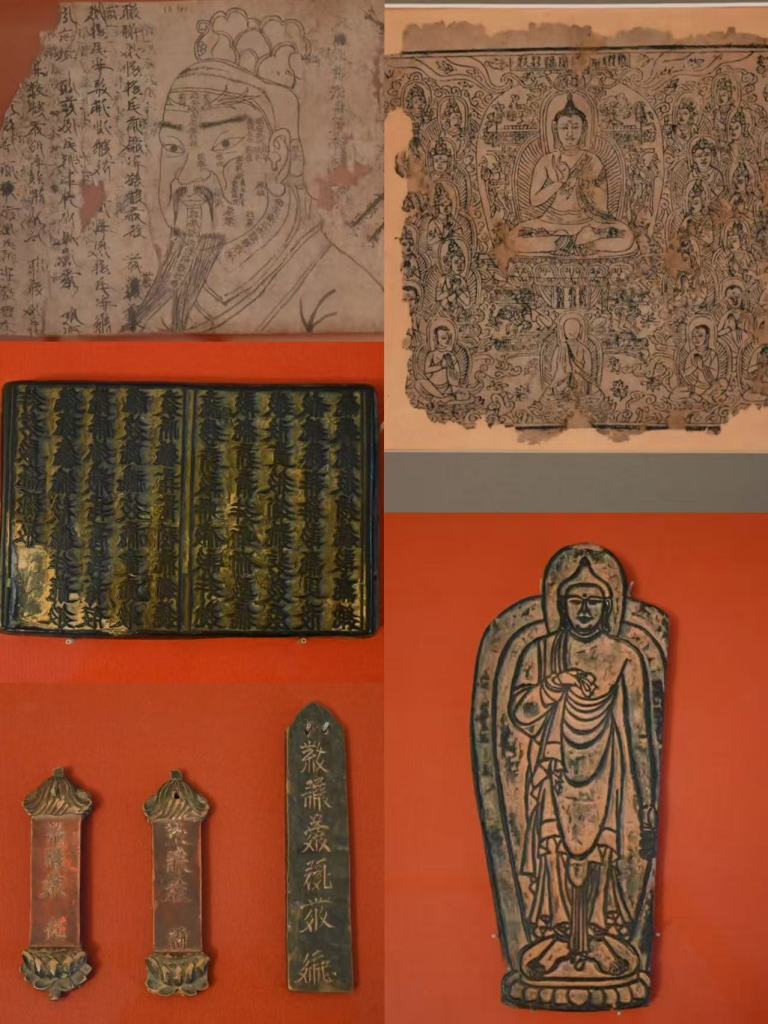
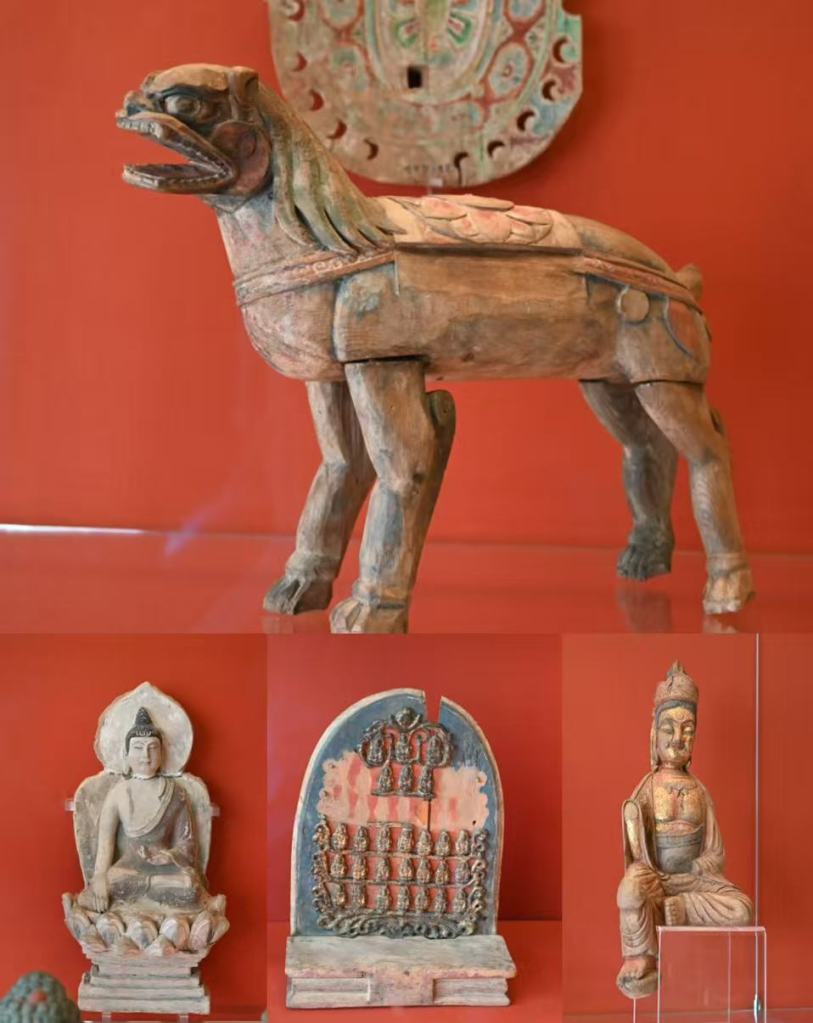
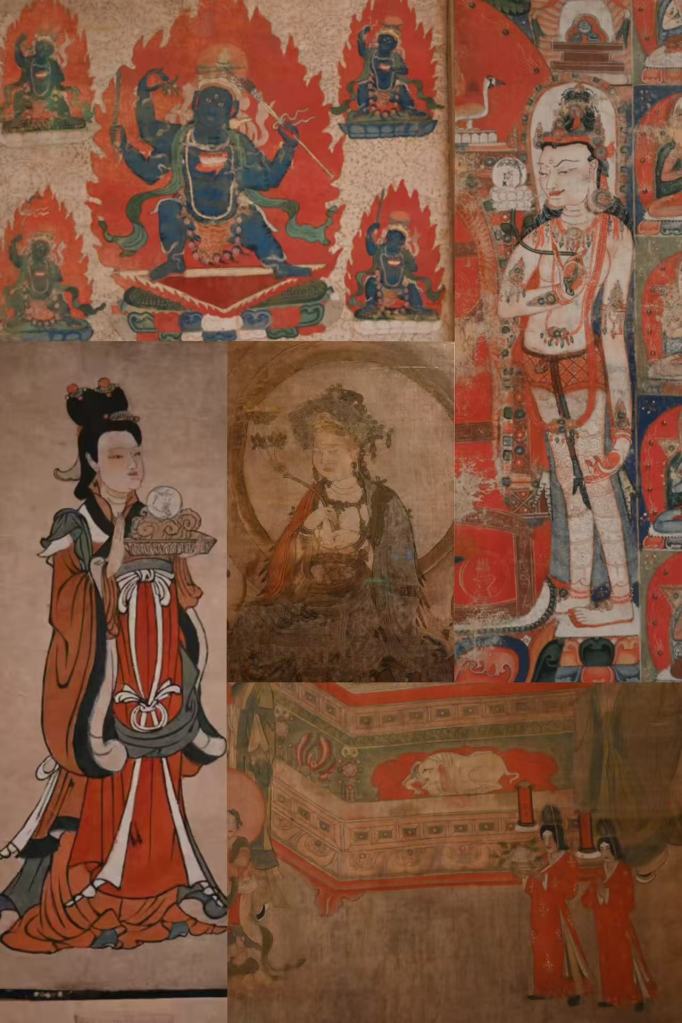
The Tufan pieces were exquisite, as expected.
The unexpected discovery was the Sogdian murals.
The hymns of Zoroaster are difficult to decipher. Ahura Mazda created the plain which the Sughdhas inhabit as an ideal land, and yet death was never far behind. What, then, is the difference between a blessing and a curse?
Standing in the Hermitage, I still hadn’t escaped Persia. Persian culture was the ground beneath Sogdian civilisation. The world of Ahura Mazda carried its own languages, aesthetics and belief, shared across cultural boundaries. In the famous Blue Hall murals from Penjikent, Rostam, the hero of Persian epic, appears with an elongated head, riding horseback with bow in hand as he battles a demon. From mythology and epic poetry to feasting, hunting, military expeditions and combat, and finally to fables and fairy tales, the scenes are arranged in rectangular panels – a series of visual encyclopaedias without words.
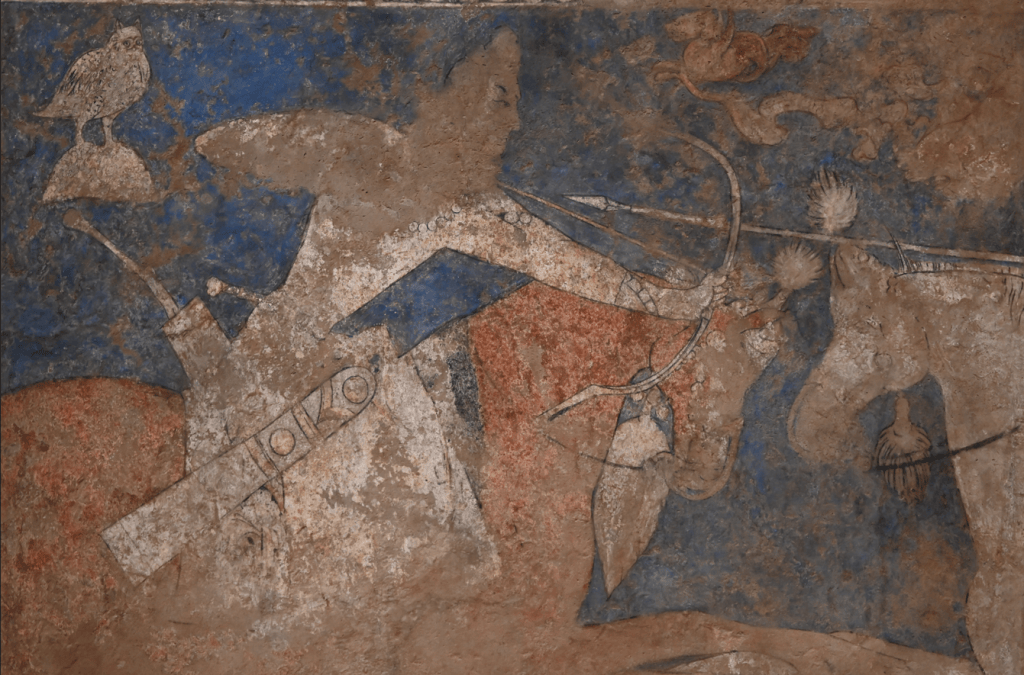
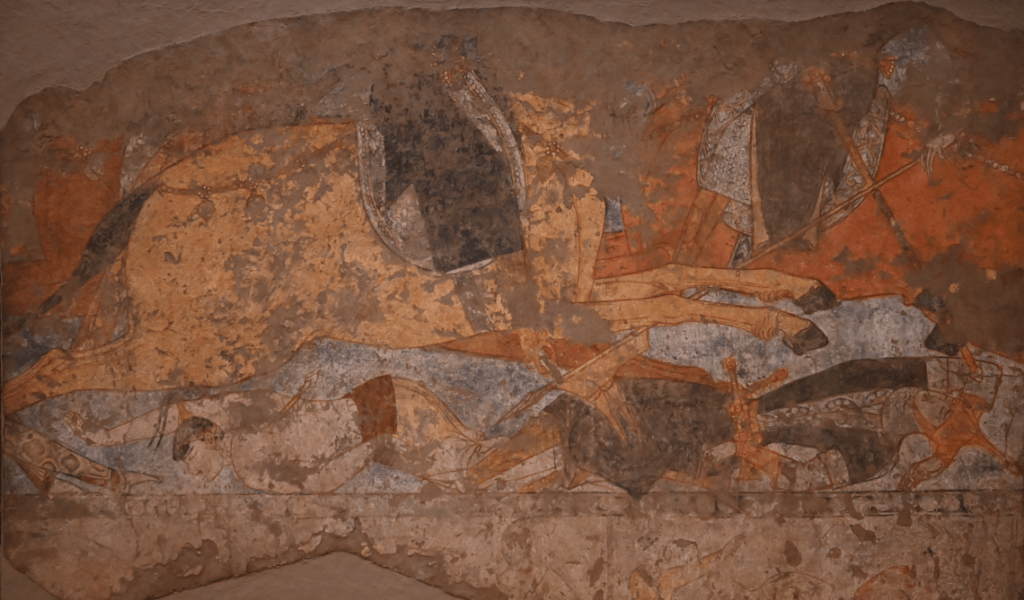
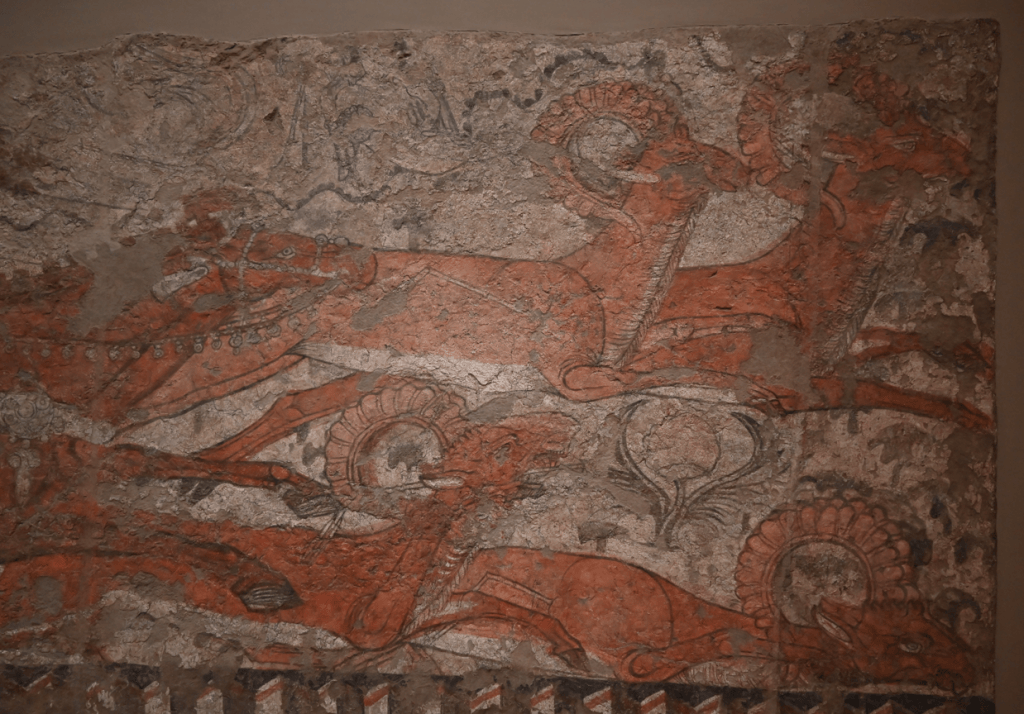
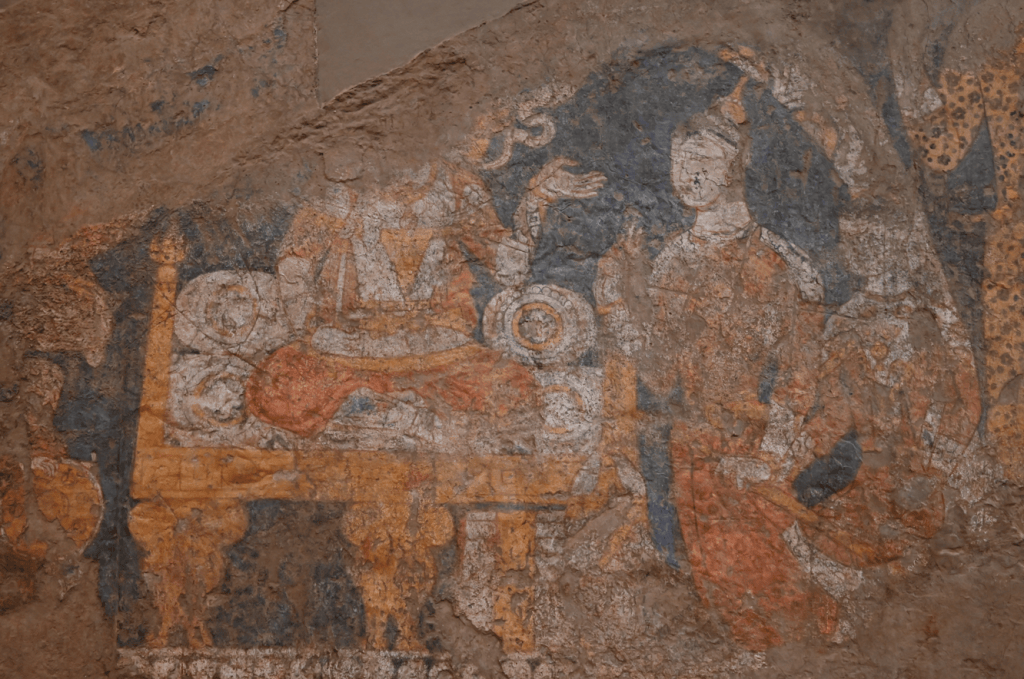
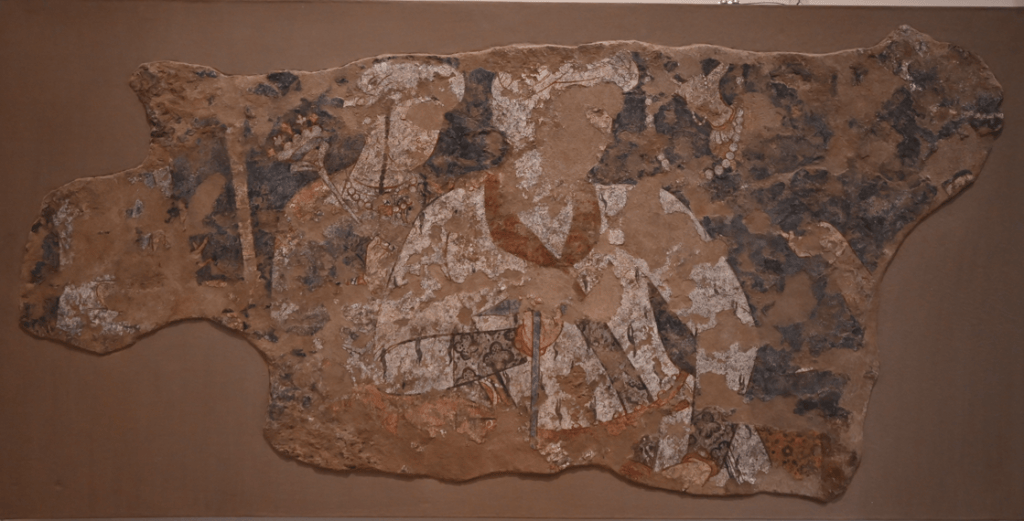
The Sogdians never built a vast empire of their own, but their commercial networks spread like a web, linking Greece, Rome, Central Asia, South Asia and China. So it is hardly surprising to find the image of a she-wolf suckling infants among the murals.
Red, brown, yellow and blue dominate the paintings. The blue, still intensely vivid after a thousand years, must surely be lapis lazuli: a noble blue impossible to ignore.
The Sogdians must have been rich indeed. The world their merchants measured on foot was wider than the map of any empire.
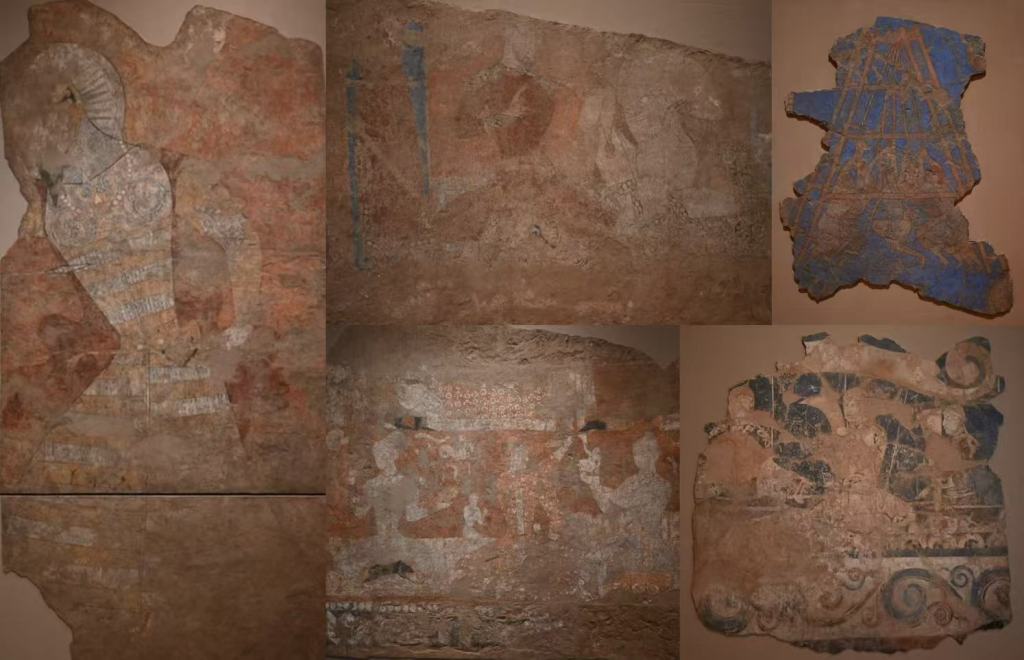
Empires are difficult to define. Peter the Great was determined to make Russia part of Europe, yet the empire itself never stopped extending into Asia. Conquest, trade, exchange, and then collecting. Traces of different civilisations were brought within the Russian Empire’s borders and, inevitably, found their way into the Hermitage.
They may never have the chance to return to their homelands. If they can be kept safe and properly cared for here, then so be it.
Outside the Hermitage, the setting sun scattered gold across the Neva. A boy of about twelve stood fishing alone. Like so many other visitors, I strolled along the riverbank and suddenly remembered that I had forgotten to see the Scythian gold. Oh well.
Next stop: to look for the Russian soul among the dead.
(to be continued…)


Leave a Reply