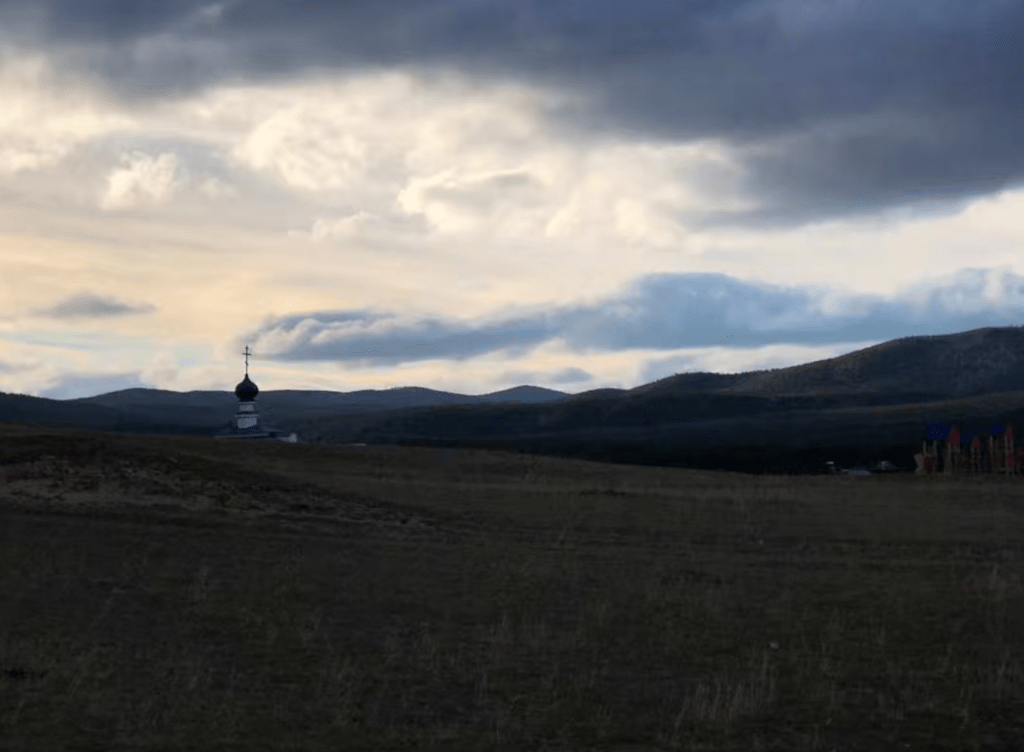
The seventy-kilometer journey from Irkutsk to Lake Baikal often meant several hours without even a 3G signal. Apart from reading, there was little to do but look out of the window at the endless repetition of rolling grasslands and birch forests.
It was late autumn. Haystacks had already been piled up, and cows and horses wandered along the roadside, seemingly taking care of themselves—finding their own food and living their own quiet lives.
Russian writers have always portrayed forests in a way that feels almost magical. There is no movement, no sound. Conifers, fallen leaves, moss, and endless marshes merge into a kind of deep silence. Heavy birds sit awkwardly on branches; beetles crawl across tree trunks, making sounds like cracking nuts. Ducks whisper somewhere in the distance, while squirrels disappear among the trees. Old pine cones fall and hit the branches below with a dry, hollow sound.
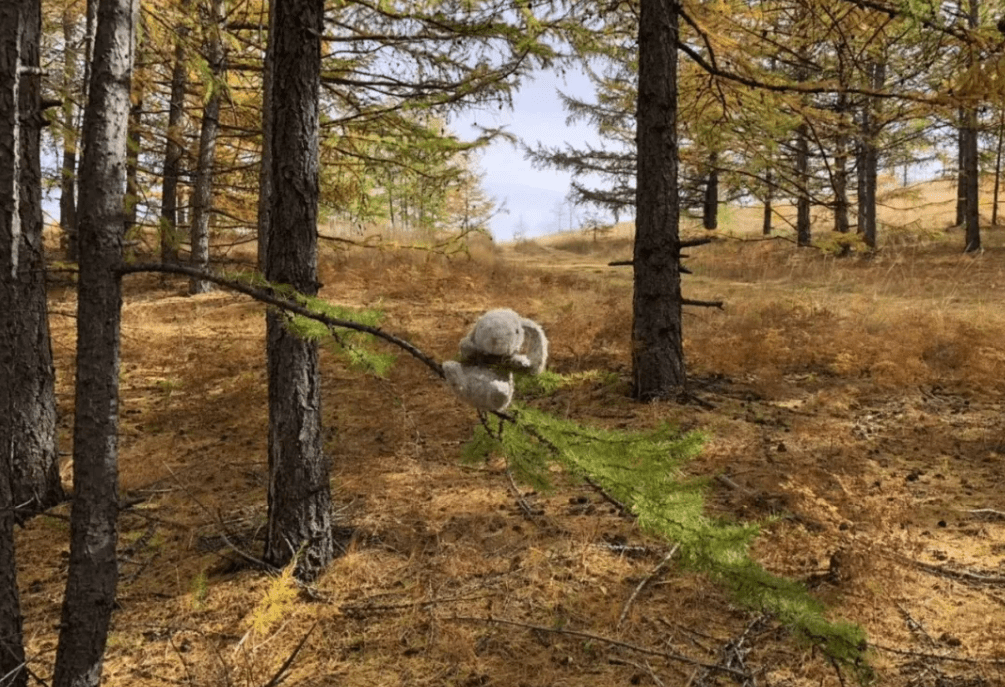
Deep inside the forest, the wind is gentle. But the moment you step onto the open shore of the lake, the cold arrives instantly. The wind is so strong that you can barely keep your eyes open, wishing you could curl yourself into a tiny ball.
It was freezing. Even two pairs of thermal pants were not enough…
Without exile, would anyone really choose to settle in such a harsh and remote land?
And yet, if one survives the winter, Siberia offers abundance: meat, fish, nuts, and berries, all generously provided by nature.
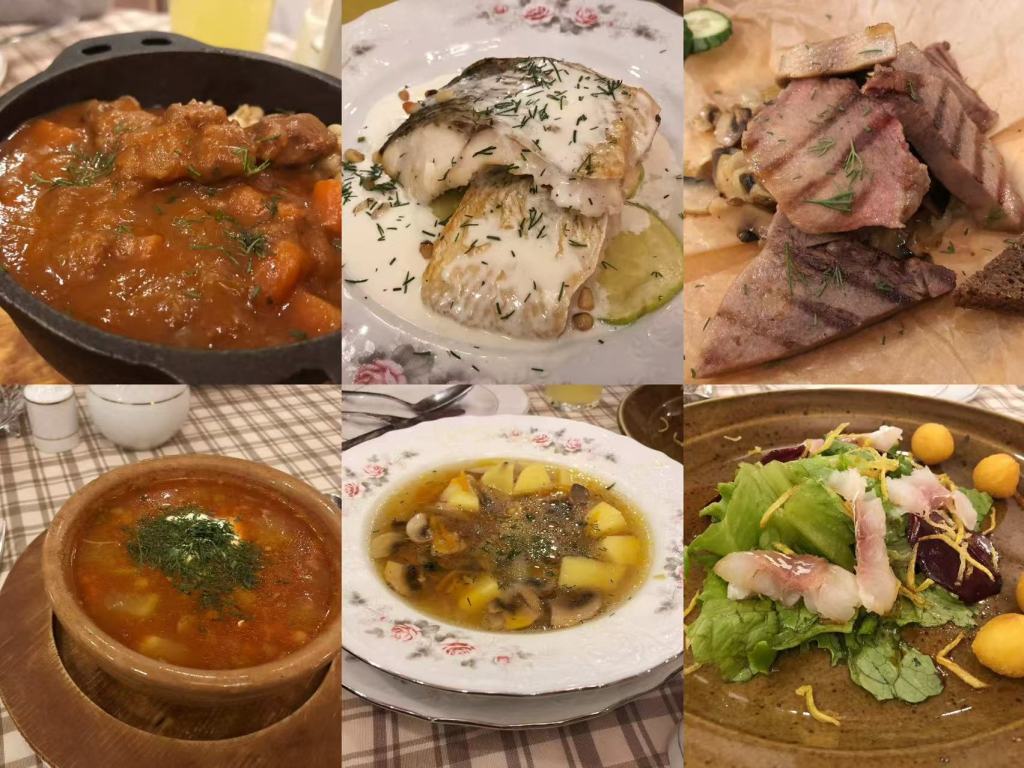
On Olkhon Island, we mostly ate Mongolian-style steamed meat buns. Back in Irkutsk, we followed our landlord’s recommendation and visited a local restaurant.
Perhaps every Chinese traveler in Irkutsk had received the same recommendation and the dining room was full of Chinese guests. A place where, apparently, business would be difficult without Chinese customers.
Unexpectedly, it turned out to be very good.
The restaurant sourced ingredients through a local agricultural cooperative, mainly from small and medium-sized farms within 300 kilometers of Irkutsk. The farms and the restaurant had long-term partnerships and knew each other well.
This was not the kind of place where you would find oysters or truffles, the symbols of luxury dining elsewhere. Instead, it offered something much more meaningful: local ingredients prepared through traditional recipes.
Baikal whitefish, wild cherry cake made with Siberian berries, grass-fed beef, Siberian apples, and local cheeses.
The quail was recommended as a meat even more flavorful than rabbit or chicken, and it lived up to the expectation. The frying was light, paired beautifully with simple buckwheat and porcini mushrooms. Only the breast, which tends to dry out easily, needed a little beef sauce. The legs were tender and juicy, lightly seasoned, and best enjoyed simply by picking them up with your hands.
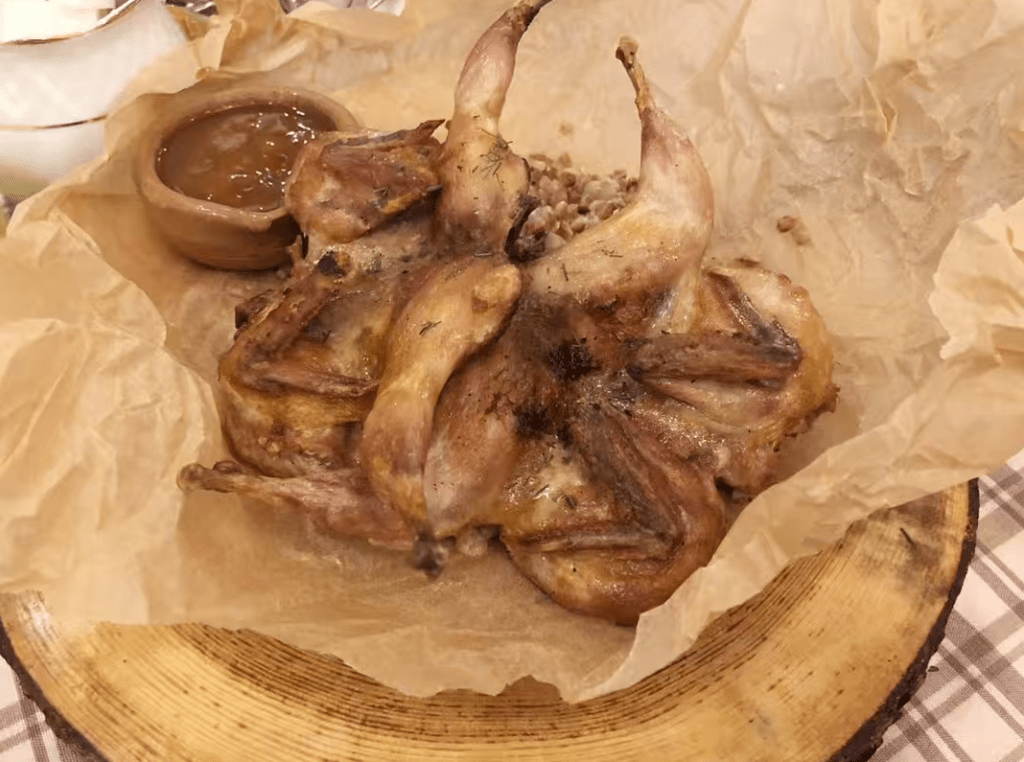
Years later, this dish found its way into one of my own Chinese banquet menus. It stayed with me longer than many of the photographs I brought back from Siberia.
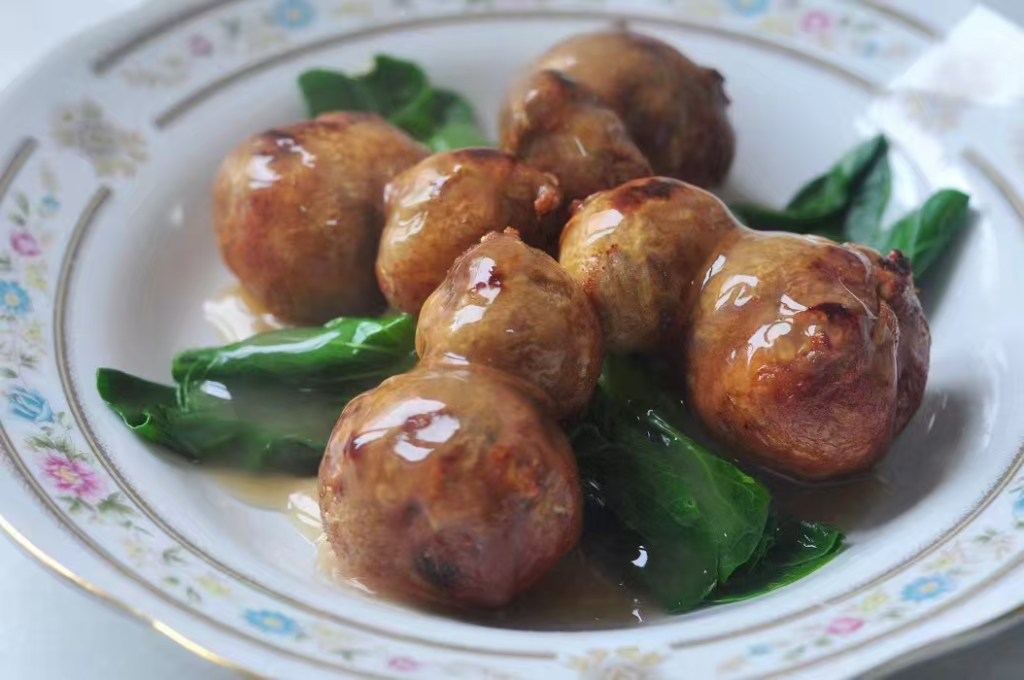
Раздробленная черемуха, the only Russian words, I wrote down during the trip.
Wild cherry is not actually cherry. It is a Siberian berry harvested only in August. The dessert was a substantial three-layer chocolate cake with sour cream filling, topped generously with crushed wild cherry seeds. The tiny crunch of the seeds created an unexpectedly interesting texture.
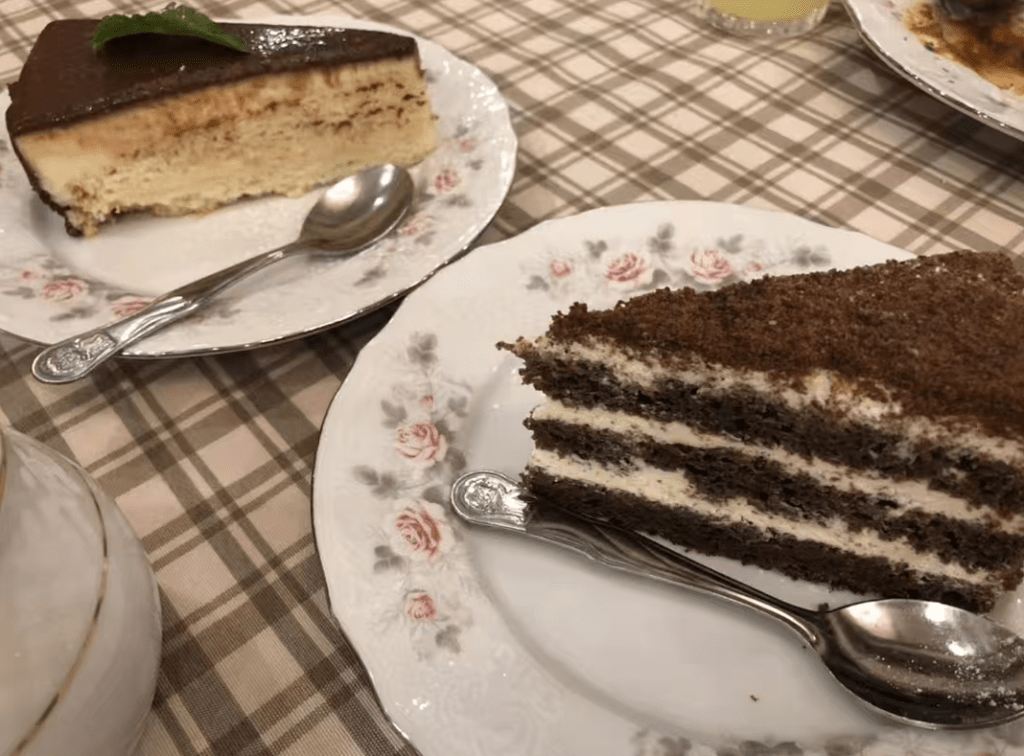
Listening to Rachmaninoff, my memories of Russia came flooding back.
Many years have passed. The restaurant I visited has since closed, and Lake Baikal must have transformed into yet another destination on the global travel map.
Russia has always felt like a fascinating land of contradictions – an iron tide carrying the softness of velvet; a bear on one side, and a melancholic poet on the other. Rough and tender. Brutal and sensitive.
The same country that produced vast landscapes, harsh winters, and a history marked by immense power also gave the world some of its most delicate music, literature, and art.
My father’s generation still remembers some Russian. When I was a child, I learned songs like Moscow Nights and Katyusha, and even today, I can still sing them without hesitation.
I still listen to Rachmaninoff and Shostakovich. I still read Lev Shestov. The collections of the Winter Palace are every bit as impressive as those of the Louvre.
And yet, where are those noble souls today?
Long before this era comes to an end, I have already lost the desire to return.


Leave a Reply