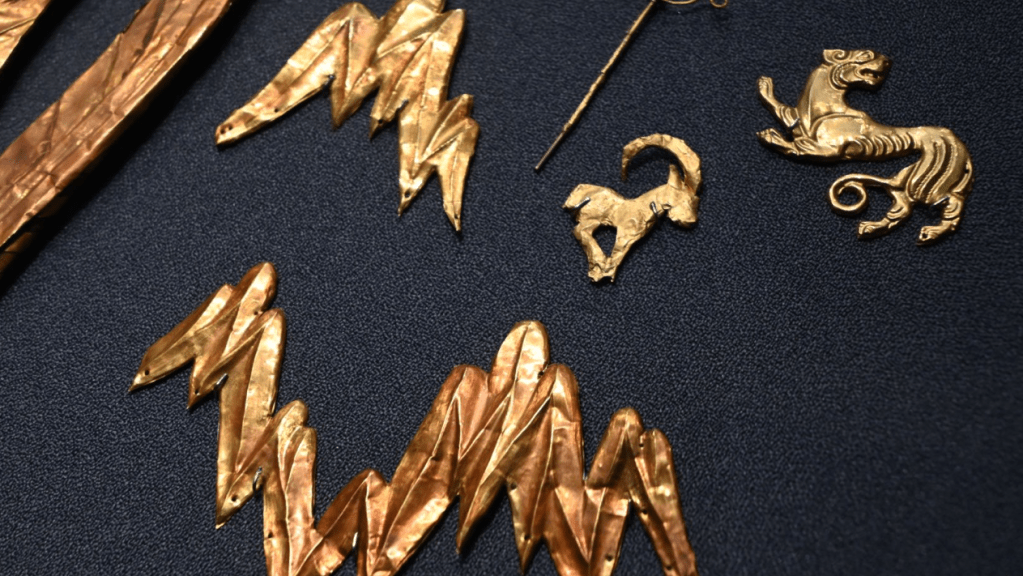
The Scythians, an ancient nomadic civilization known as early pioneers of the Silk Road, left behind a legacy shaped by gold. Famous for their weapons, horse gear, and stunning goldwork, these skilled artisans created pieces that still amaze us today. Herodotus wrote about their love for gold, describing how Scythian royalty wore golden belts, drank from golden cups, and were buried with golden treasures.
What Makes Scythian Gold Unique? It’s not just about beauty, Scythian gold tells a story of cultural fusion. Its exceptional craftsmanship and beauty! By the 3rd century BC, their artisans were creating designs so advanced, they still leave us in awe. Their work mixed Greek techniques (The nobles sometimes hired Greek artisans!) with nomadic flair, inspiring art across the Silk Road to places like the Near East and China.
I originally planned to see Tuyuhun gold artifacts in the Al Thani Collection, but they weren’t on display. Instead, the Musée Guimet’s “Kazakhstan: Treasures of the Great Steppe” exhibition became a highlight. Though small, it showcased stunning Scythian-style gold pieces over 2,000 years old. One standout was a winged, horned snow leopard – a symbol of power and mystery.
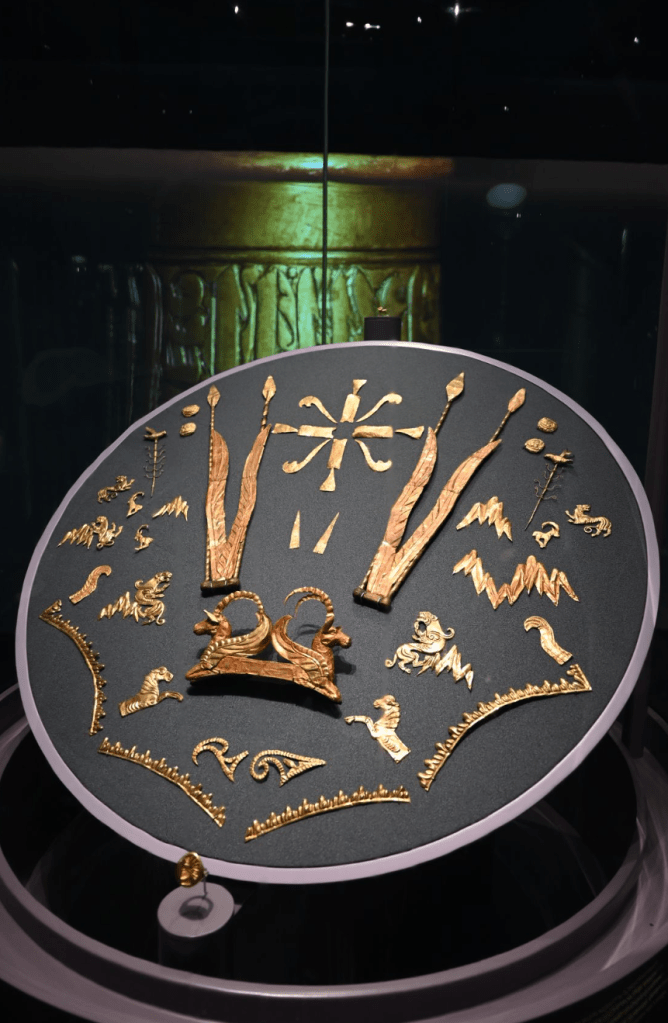
The artifact’s label calls it a snow leopard, but some experts argue it could be a griffin. Without written records from the Scythians, we may never know. Griffins in ancient art took many forms, blending animal features like lions, eagles, or even horns. This ambiguity adds to the intrigue: is it a real animal made mythical, or a symbol meant to inspire awe?
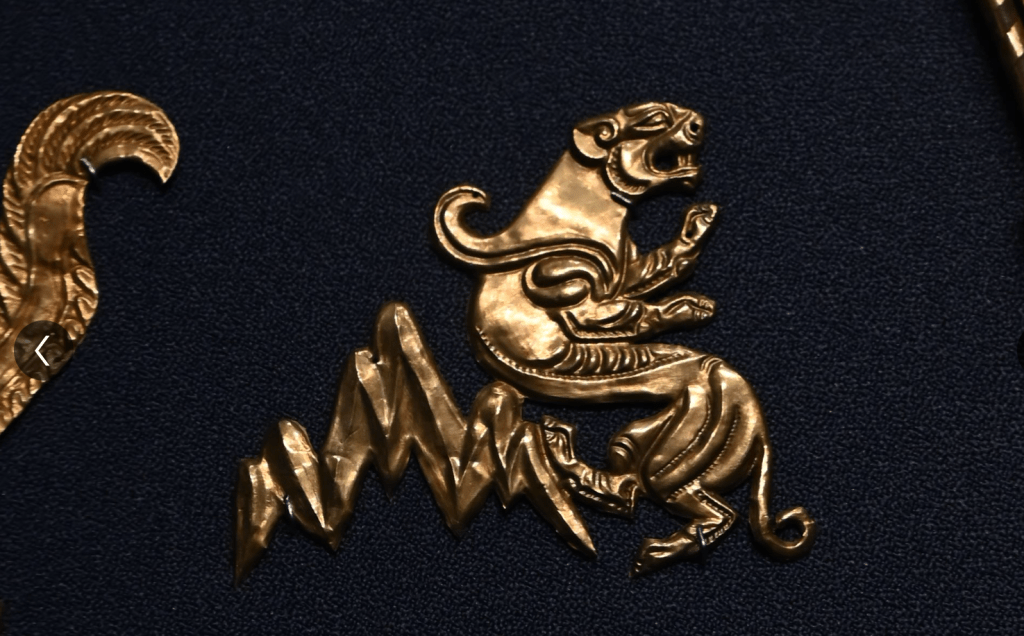
Steppe gold never loses its charm, it has always held a special magic. Each piece whispers stories of nomadic life, cultural exchange, and beliefs frozen in metal. Whether depicting leopards, mythical creatures, or symbols of power, these treasures remind us that beauty and mystery were passed down through generations – especially when shaped into gold.


Leave a Reply