Just before Qingming Festival, I went up the mountain to visit my grandmother and aunt.
I had two grandmothers. The one who looked after me as a child was my little grandmother. She wasn’t my father’s birth mother. Before I turned five, my father would ride his bike to take me to her home. Back then, there were still fields in Zi-ka-wei. On the right side of the alley stood thatched houses with bamboo fences. After a few meters, we turned left into the courtyard. I’ve long forgotten what the room looked like. I only remember the well in the yard, and the coal briquette stove that never quite worked well.
The grave is on the mountain in her hometown. Relatives had already cut the overgrown grass the day before. There was a photo of her on the tombstone. Ah, I had almost forgotten her face. The moment I saw that photo, the tears came pouring down. Not long after I started elementary school, she had returned to the countryside to recover from illness. Decades passed without seeing her. In the photo, she still looked just as she always had.
Later, I told my father that when his birth mother passed away, I didn’t feel sad at all. I only remember her face turning grey, her lips shrinking inward over her teeth. I thought at the time: So this is what death looks like.
Turns out, whether someone loved me or not – even as a young child, I remember.
Turns out, the bond formed with someone who cared for me in childhood far outweighs blood.
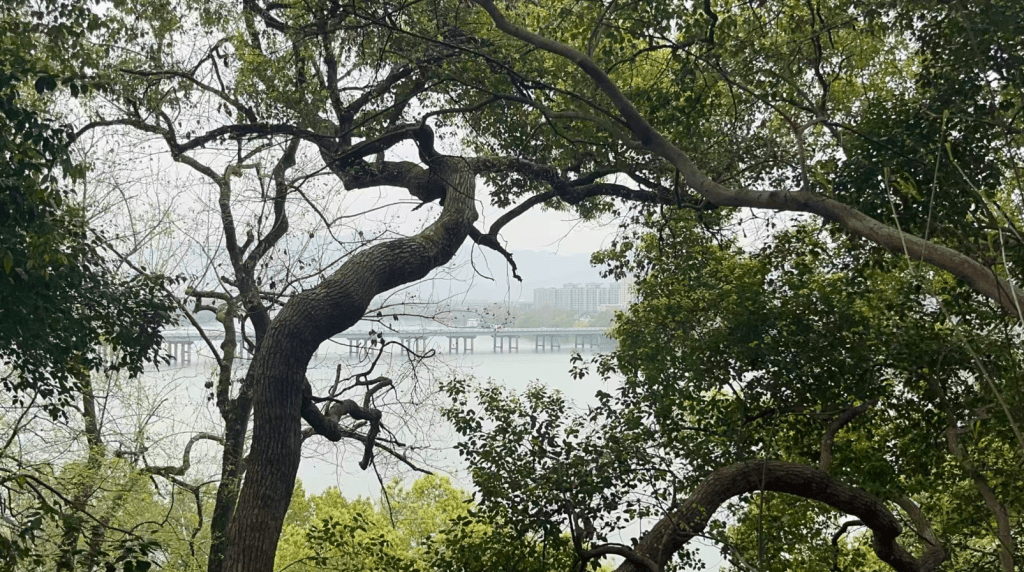
The grave faces south, with the hills at its back. The FengShui is said to be excellent. The pines in front have grown very, very tall. The first ones planted were stolen, so replacements were put in – no one has touched them since. To sweep a grave in the countryside, you first honor the earth god. Yellow paper and candles must be lit. No tin-foil spirit money here – we burn folded yellow paper ingots. My relatives say these have a higher denomination. On the grave mound, colorful, glittering paper money is hung from bamboo branches. Chrysanthemums are sold everywhere. Offerings include fruit and qingtuan, the green rice cakes. These were dark with a hint of green, made with real mugwort leaves.
We went down the mountain to the village rice cake shop and bought several qingtuan. No filling, just solid rice cake. Dense, substantial, faintly sweet. Absolutely delicious.
My parents’ generation still takes tomb restoration seriously. I asked my father: after three generations, who would still come to visit? He didn’t answer. My mother said: by then, a hundred years will have passed; they’ll already have been reborn as new people.
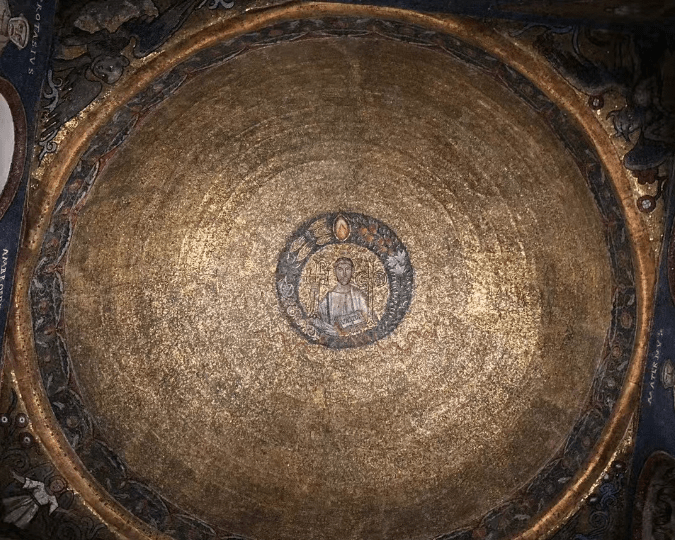
In my faith, there is no reincarnation. In church, the living and the dead are always together. Beneath the altar lie saints from centuries ago, some from over a thousand years back. A friend told me that it’s not only canonized saints who can rest there; in theory, devout members of the diocese can be as well.
I have a special list in Google Maps. I call it “The Grave-Sweeping Collection.” St. Peter’s in the Vatican. St. Ambrosius’ in Milan. St. Valentine’s in Rome. St. Thomas Aquinas’ in Toulouse. Bruckner’s grave at St. Florian’s. And so on.
A couple of weeks ago, I was listening to Heifetz. I was so moved that I actually wanted to visit his grave. But there is no grave. The master requested cremation, and his ashes were scattered from an airplane into the sea. From then on, he has been dispersed across the sky and the terra – everywhere and nowhere, with us, always.
 Veni VEDI Voravi
Leave a comment