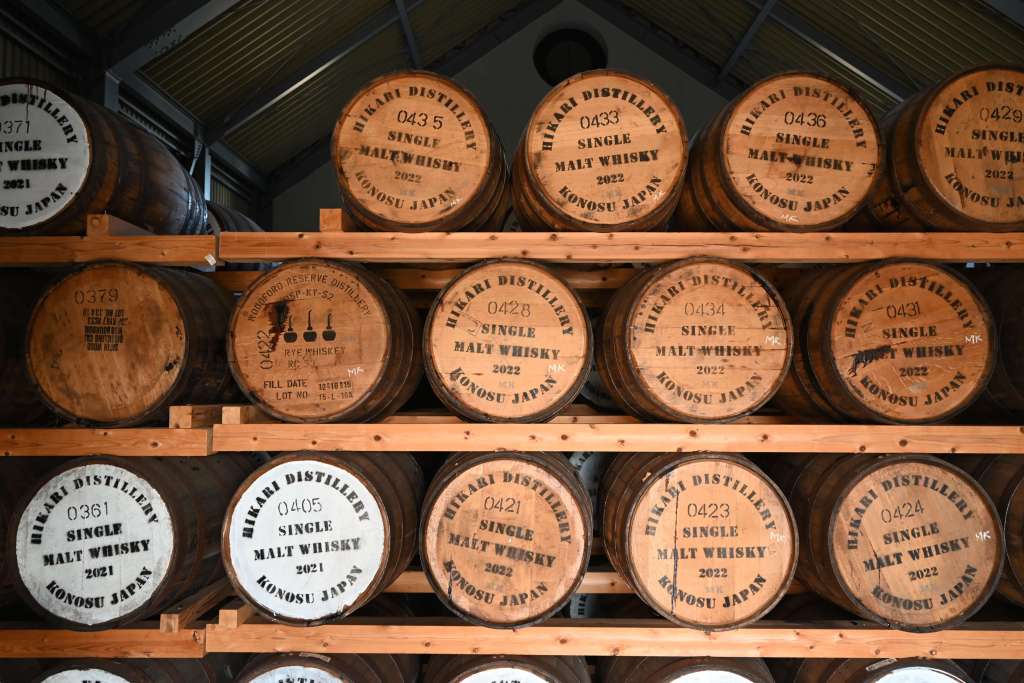
Along the Nakasendo, at its seventh post town, lies Konosu – once a shogunate landholding directly administered by the Tokugawa government and today part of Saitama Prefecture.
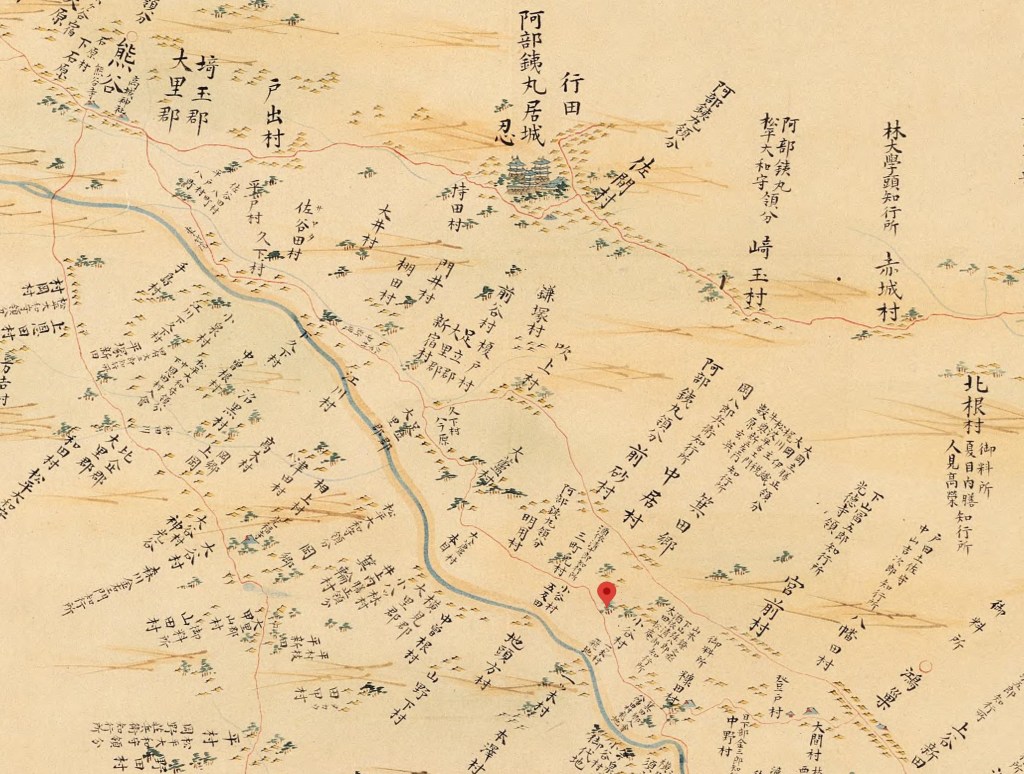
Not far off, the Arakawa River completed a deliberate, slow, and profound westward shift. Over centuries the river, more or less as people in successive eras intended, nourished a wide alluvial plain with its floods. The terraces that connect to the Chichibu Mountains were shaped into a broad, gently rolling farmland that might remind some visitors of the lowlands of Flanders. Summers here are hot and humid; winters are relatively mild and dry – a classic temperate monsoon climate, very different from Scotland.
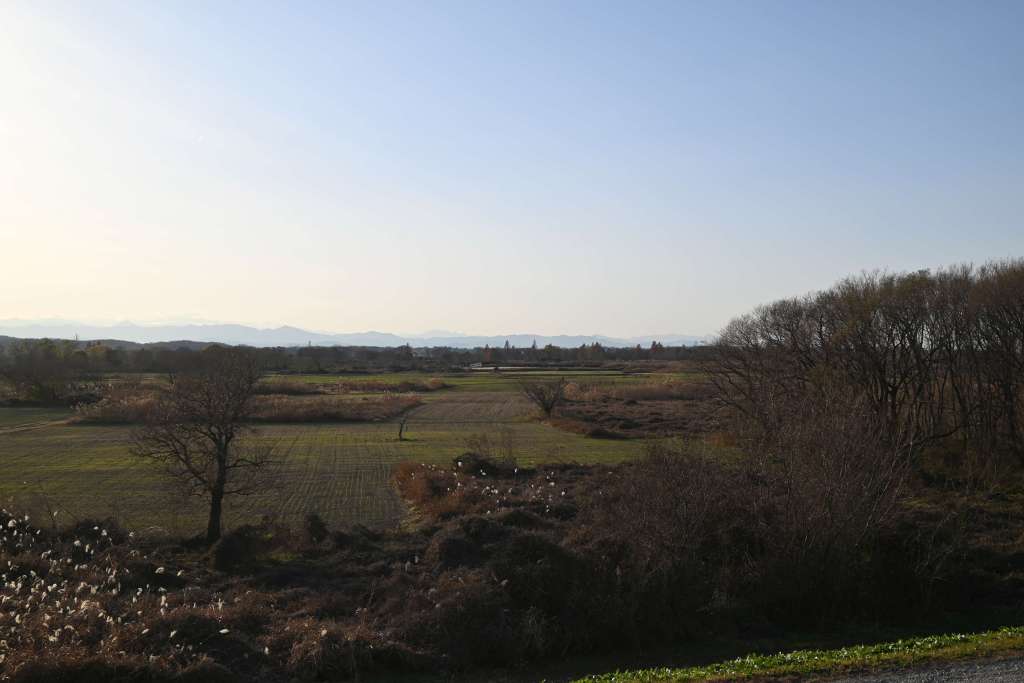
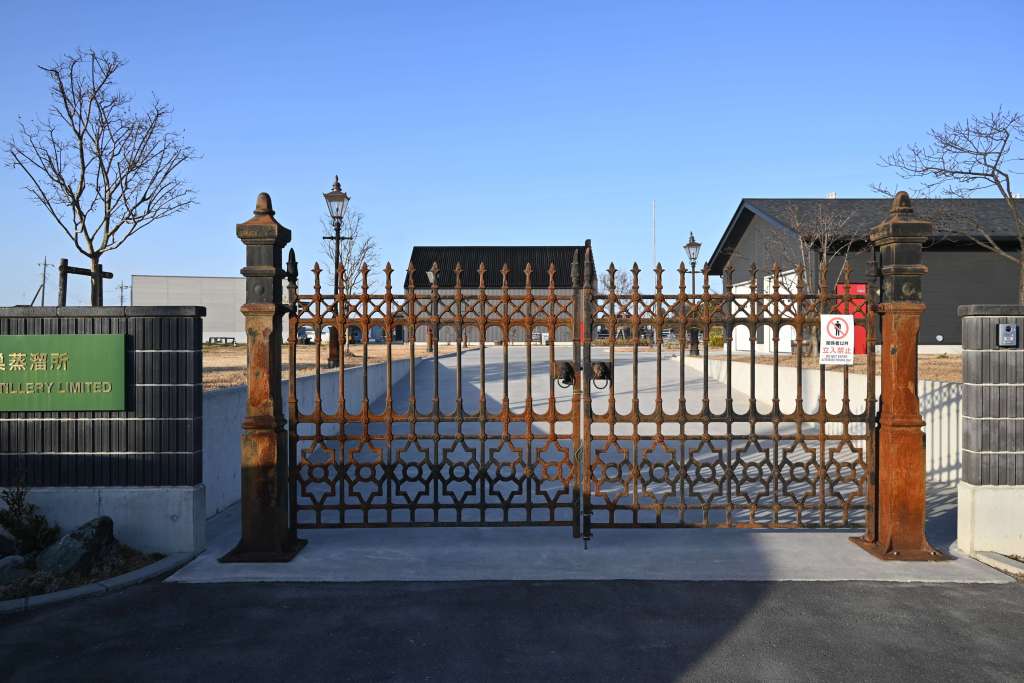
By a series of convergences, a distillery has taken root here.
A Cathedral in a Seashell
Last October I visited another small distillery. At the time I vaguely felt that some production steps couldn’t be completed on-site, and perhaps that would leave a gap in the flavor. But when I arrived at this even smaller distillery I realized – scale has never been the real constraint.
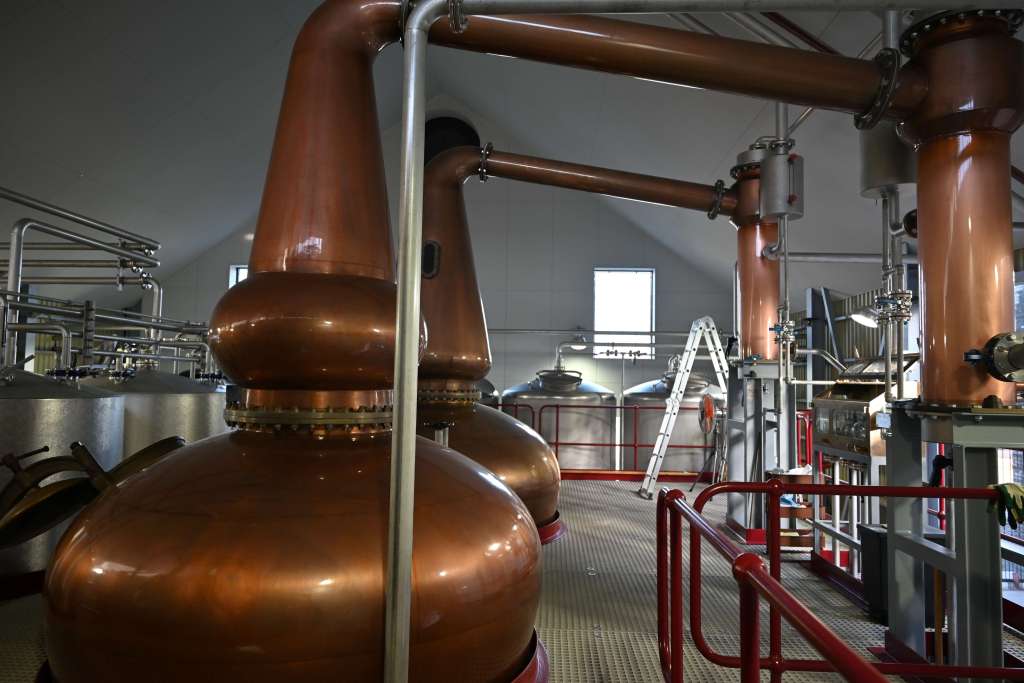
This is a distillery that one person can operate. Every piece of equipment is placed with the owner’s careful ingenuity, each finding its place in a very limited space. The whole distillery is arranged like a compact duplex: mash tun, fermenters, stills – pipes winding between them like arteries, every inch assigned a purpose.
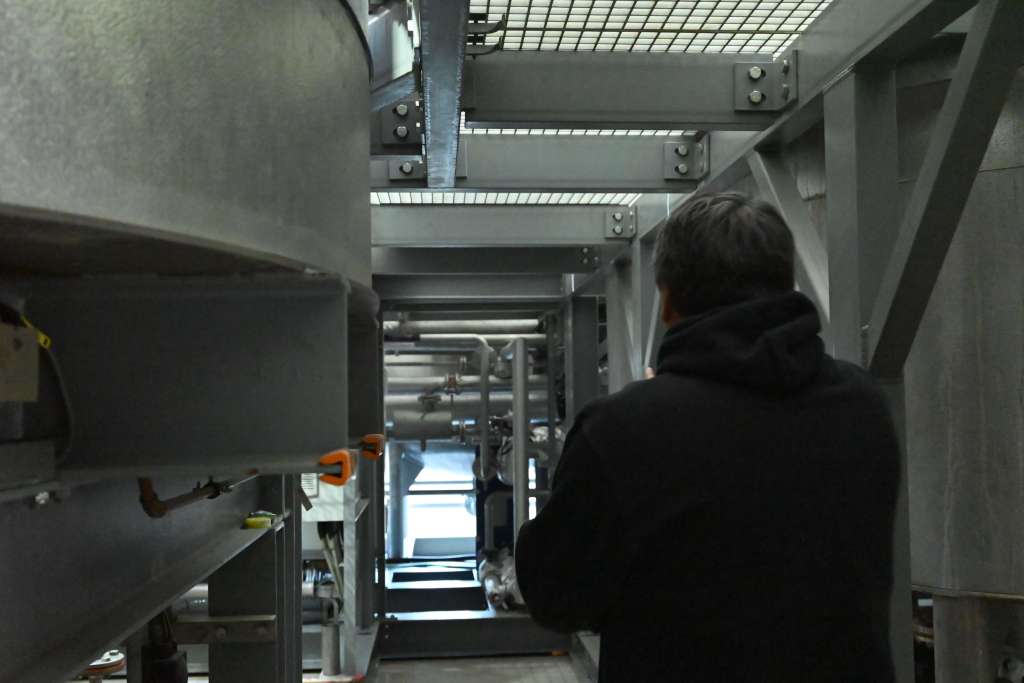
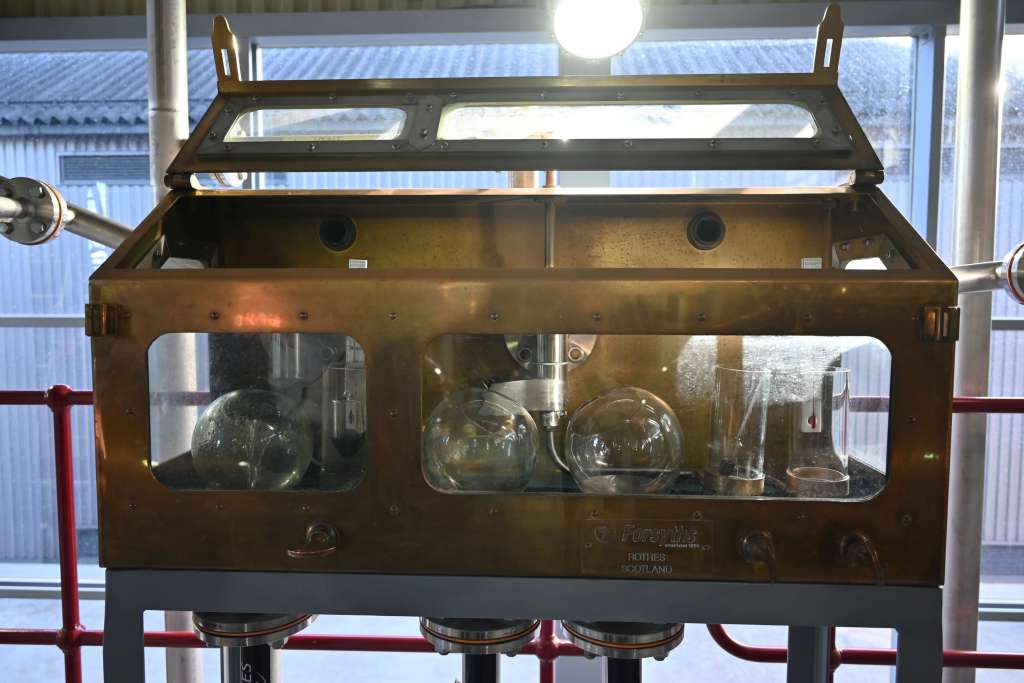
Most distilleries have equipment permanently fixed to the ground. Here, all main components are skid – mounted. The whole system was designed in Scotland; the owner spent many years developing it there. Once shipped to Japan and reassembled, a distillery quickly “grew” on the Konosu plain.
Standing on the second-floor platform I could see the entire production flow at a glance: mashing, fermentation, distillation – only a few steps apart. A single barley grain travels a short physical route from hopper to spirit; but the journey it must travel through time is only just beginning.
Small and efficient-that is Japanese spatial intelligence. Small and precise-that is the ultimate expression of a distiller’s philosophy. In this one-person operation there are no redundant steps, no compromises. The location of every component, the routing of every pipe, silently speaks the owner’s commitment.
Size has never determined the limits of flavor.
A Tasting in the Kitchen
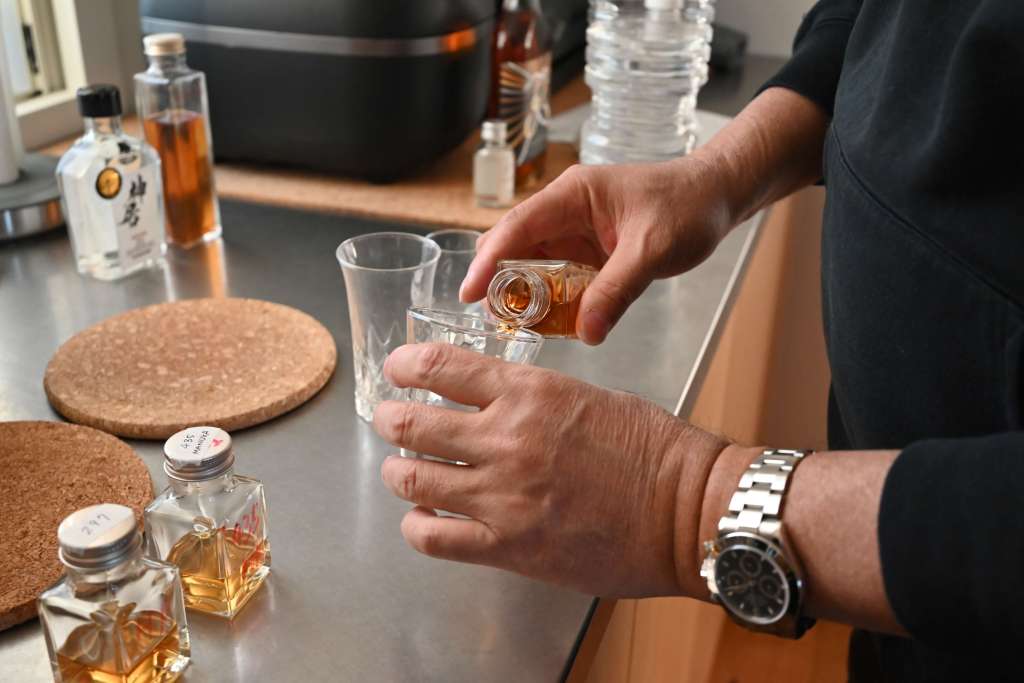
I stood beside the kitchen island. There was no carefully lit tasting room, only an assortment of differently shaped glasses – a rare, relaxed voyage of the palate.
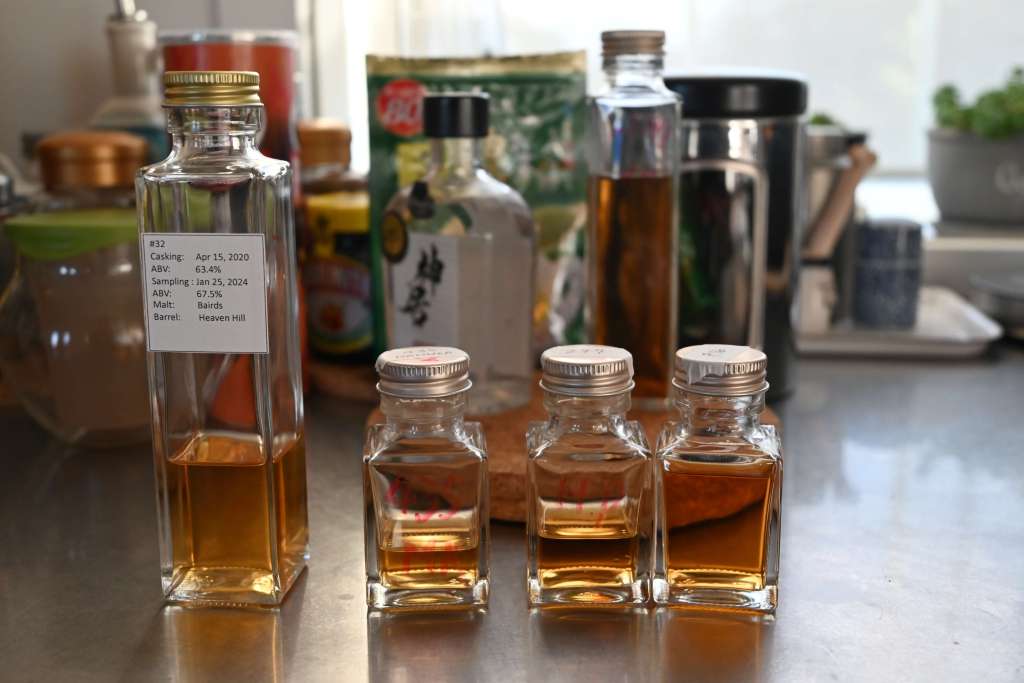
No. 32 | Young, but unashamedly sweet
Almost five years old. A young spirit, very sweet – the clean, crystalline sweetness of maltose. The sweetness blooms on the tongue and quickly fades, not clinging.
Because of that sweetness, the creamy texture in the following glass was almost masked. But I can’t blame it. It’s delicious, with real potential as a cocktail base. A whisky that young women might enjoy.
P16 | The taste of adulthood
Amber. Pretty.
Matured in shochu casks, it enters the mouth extremely smooth, not sweet. This is an adult’s whisky – meant to be drunk neat, to exist as the lead rather than bowing to food pairings. Even if its creamy note is temporarily forgotten under another stronger flavor, its suppleness and roundness still convey a certain refinement – yes, roundness. If there were a god of whisky, this might be the Eastern flavor he hoped for.
I want to keep drinking it.
No. 435 | The secret of manuka
Slightly meaty, slightly tea-like. A four-year-old Scotch is usually too young to drink, but here, because of the climate and the still design, the spirit already shows noteworthy maturity.
The barley came from New Zealand: clean climate, clean air, clean water. The maltster kilned it over manuka wood. That barley is expensive, and making whisky from such costly barley makes you feel the price can be justified.
No. 297 | The balance of sweet and salty
Put into cask in March 2021. Heavily peated: 50 PPM.
Yet the entry is still smooth. It isn’t aggressively peaty – not harsh, not confrontational, even somewhat tame. What I love is the subtle salinity the spirit carries.
Sweet and salty – a wonderfully balanced combination. This is a taste Shanghainese people might enjoy, because “the highest achievement of Shanghai cuisine is sweet and salty together.” The maturity is very good. There is a smoked-fat note that reminded me of a bacon-washed whisky I drank years ago in a Beijing whisky bar.
Sweetness and fat – pleasures written into human DNA.
The Spirit: a Narrative Tasting
The most important thing about this visit was that I tasted the spirit.
Not whisky per se, but the spirit, a clear liquid that looks like water, but it sits heavier than water.
Making a spirit with impact is not especially difficult. You simply avoid suppressing certain flavors at the start; the tail will inevitably fade – every taste ends, just as every story ends.
But this glass was a complete, journey-like flavor. That, I think, is very hard and must have been carefully designed. There was an introduction, development, a climax, and a lingering aftertaste. Not a linear progression, but layers unfolding. Like many top-tier sensory experiences, a spirit can be narrative. Technical refinement makes philosophical expression possible – about how time flows, how a story unfolds, and how the Eastern aesthetics of resonance (气韵 qì yùn) and negative space (留白 liú bái) can find counterparts in liquid form.
Cautiously, I know I need to taste more spirits before I would boldly call this a “new whisky movement”. But my intuition says it’s close.
If this is not the founding of a new movement, it is at least a directional hint: whisky does not have to be Western – defined by linear force and impact. It can also move through introduction, development, turn, and resolution(起承转合), expressing an Eastern sense of harmony.
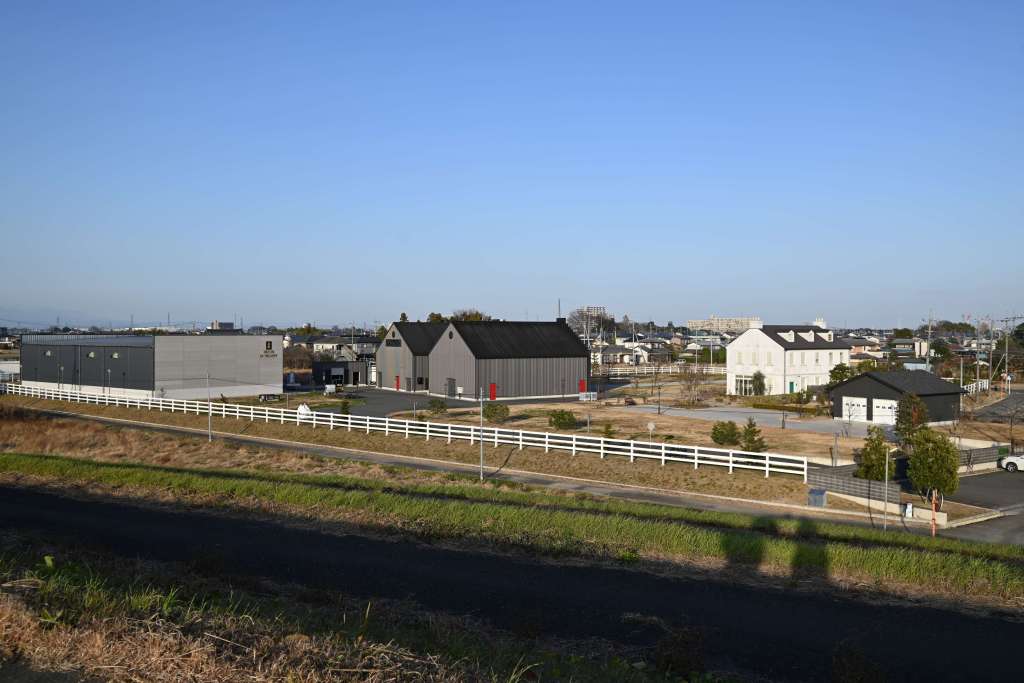
We walked up to the rise behind the distillery and stood at what may once have been a fork of the Nakasendō. Looking north, far in the distance, that’s the direction of the branch of the Nikkō Kaidō that once carried the shogun’s retinue on pilgrimage to Nikko Tosho-gu.
It was there that Japan began to walk its own aesthetic path.
 Veni VEDI Voravi
Leave a comment